Here's a question worth sitting with: if a neighbor two miles away sold their home in eight days over asking price, and you're watching your street sit quiet for a month, are you in the same market? Officially, yes. Practically, no. And that gap between the official story and the practical one is exactly where homeowners get their pricing and timing decisions wrong.
Beaverton doesn't have a housing market anymore. It has three.
Why This Matters Right Now
Every headline this year has led with the same city-wide number, a modest year-over-year dip in median sale price. That single figure gets repeated in news segments, dinner conversations, and casual "how's the market?" small talk until it starts to feel like the whole truth.
It isn't. A city-wide median is an average of very different behaviors happening in very different places, and right now those behaviors have diverged more sharply than at almost any point in recent memory. Homeowners who make decisions based on the average, instead of what's actually happening on their block, risk pricing too high in a softening pocket, or underpricing in a pocket that's still running hot. Either mistake costs real money and real time.
What Most People Misunderstand
The common assumption is that a "cooling market" or a "hot market" applies uniformly across a city. People hear that prices softened citywide and assume every neighborhood softened with it. Or they hear that a nearby area is competitive and assume their own street must be too.
Neither assumption holds up. What's actually happening is a genuine three-speed split, three sets of conditions running simultaneously, each driven by a different underlying force: inventory scarcity in one segment, school-boundary demand in another, and employment-driven displacement in a third. These aren't random fluctuations. Each one is structural, and each one behaves differently depending on where your home sits.
The Three Speeds of Beaverton Real Estate
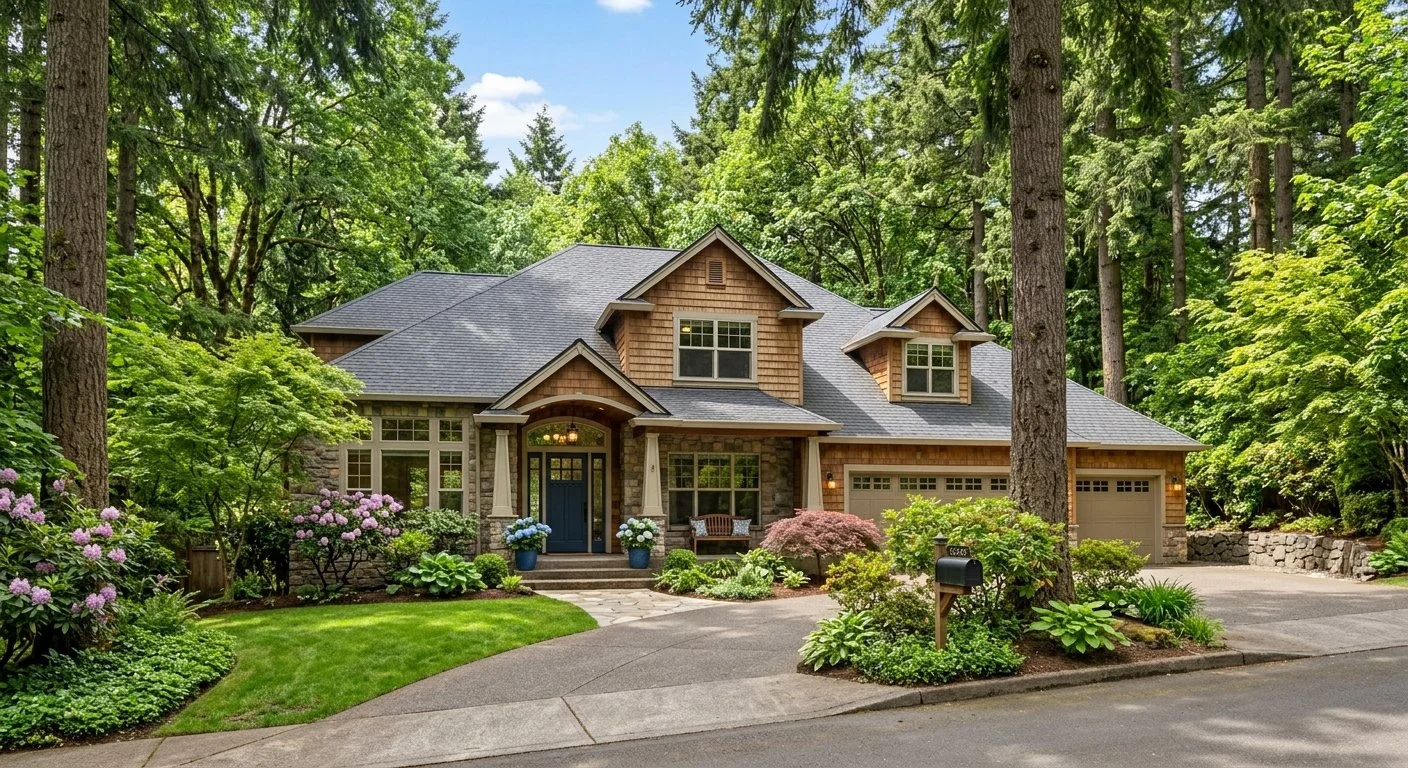
Speed One: The inventory-starved, hyper-competitive pocket. Cedar Hills and similar close-in, detached-home neighborhoods are functioning almost like a separate economy. Homes are going pending in about a week, and a large majority are selling above list price. This isn't hype, it's simple scarcity. There isn't enough inventory to meet demand from buyers who want walkable, transit-connected neighborhoods close to Portland. If you own in one of these pockets, you're in a seller's position that much of the rest of the metro simply doesn't share right now.
Speed Two: The stabilizing, demand-supported family market. Bethany, Murrayhill, and Sexton Mountain tell a different story — not a spike, but a steady, structural floor. Sales volume in this corridor has picked up noticeably, and days on market have shortened, largely because school-boundary families and move-up buyers are actively transacting. Prices here haven't surged; they've held. That's arguably the healthiest sign in the entire market — demand that's durable rather than speculative.

Speed Three: The softening, employment-exposed attached-home market.
Central Beaverton's condo and attached-home segment is where the real caution belongs. Recent tech-sector workforce reductions have added inventory and softened rents in this corridor, and some units have sat on the market well beyond what sellers expect, occasionally closing below asking price. This doesn't mean these properties won't sell — it means pricing and presentation strategy matter far more here than in the hot pockets, and sellers who ignore that gap often find out the hard way.
The nuance case: Aloha. Aloha is the neighborhood that trips people up most, because the headline number — a modest price decline — tells only half the story. Price-per-square-foot in Aloha has actually risen, and well-presented homes are still drawing strong buyer competition. What's really happening is a quality divergence: the softening is concentrated in lower-condition, longer-sitting inventory, while good homes are still moving briskly. It's proof that "the market is down" and "buyers are competing hard" can both be true in the same zip code — just for different homes.
Why Broad Statistics Can Lead You Toward the Wrong Decision
If you're pricing a home based on the citywide median, you're essentially borrowing someone else's market conditions. A Cedar Hills seller who prices conservatively "because the market is down" may leave real money on the table. A Central Beaverton condo seller who prices aggressively "because homes are selling fast" may end up sitting for months. Both mistakes stem from the same root cause: treating a citywide statistic as if it describes an individual street.
The fix isn't complicated, but it does require going one level deeper than the headline — into your specific neighborhood, your specific home type, and what's genuinely happening there right now.
Practical Takeaways

If you're considering selling:
Ask what your specific neighborhood's days-on-market and sale-to-list ratio look like, not the city's.
If you're in a hot pocket, understand that these windows can shift faster than people expect once broader conditions catch up.
If you're in the attached/condo segment, plan for a longer runway and a more deliberate pricing strategy from the start.

If you're considering buying:
Recognize that "the market is soft" doesn't mean every home is negotiable, well-presented properties in family-demand corridors are still moving quickly.
Use neighborhood-level data, not city averages, to judge whether you're in a competitive or a patient buying environment.
For both buyers and sellers, the core question is the same:
What is actually happening on my specific street, in my specific price point and home type, not what is Beaverton "doing" as a whole?
The Strategic Perspective
A market like this rewards precision over instinct. The homeowners and buyers who do well right now aren't the ones reacting to the loudest headline, they're the ones who took the time to understand which of the three Beavertons they're actually standing in. That's not a small distinction. It's the difference between a strategy built on real data and one built on a number that doesn't apply to you.

Guidance first. Decisions second.
I've spent 20+ years helping people navigate high-stakes transitions with a clear head, first coaching Division I athletes through recruiting and relocation, now guiding homeowners through their own major moves. The tools are different. The approach is the same: understand the real conditions before you commit to a plan.
Which of these three markets do you think your neighborhood falls into? I'd genuinely like to hear what you're seeing where you live — drop it in the comments.
If you want an honest answer specific to your street, request a neighborhood-specific market review — no pressure, just clarity on where you actually stand.
You can also get free access to neighborhood guides, market resources, and more at https://rhonda-riley.manus.space/