I had a conversation last week with a couple in their early 30s who'd been renting in Southeast Portland for five years. They loved their neighborhood, the walkability, the coffee shops, the energy. But when they sat down to run the numbers on buying there, reality hit hard.

A modest 1200 square foot in Portland, two bedroom bungalow with no garage and a postage stamp yard? $625,000. And that was for a home that needed updates.
Their alternative? A 1800 square foot, three bedroom home in Forest Grove with a two car garage, a real yard, and room to grow. Price: $525,000.
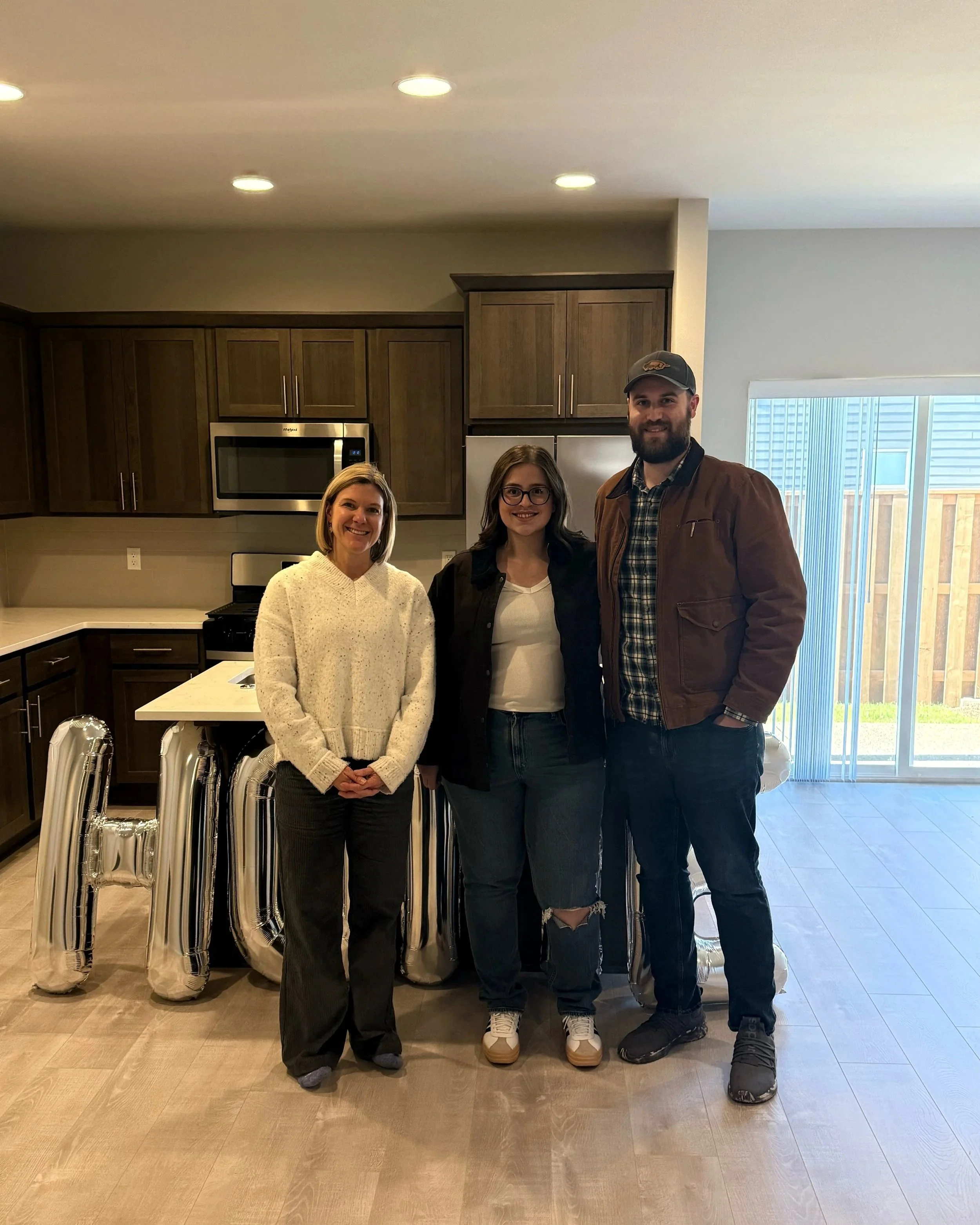
They closed on the Forest Grove home three weeks ago.
Same metro area. Same job commute with hybrid work, they're only going in twice a week. A hundred thousand dollars less. And double the space.
This is the conversation I'm having more often in 2026, because people are finally doing the math and realizing that the Portland they fell in love with five or ten years ago isn't the same city when it comes to home values and quality of life per dollar spent.
Forest Grove isn't just affordable. It's smart. And if you're still on the fence about whether moving 30 minutes west is worth it, let me show you exactly what that decision means in real terms.
The Portland Premium: What You're Actually Paying For
Let's be honest about what you get when you buy in Portland proper or the inner ring suburbs like Beaverton or Tigard in 2026.
You're Paying for Proximity Not Space
Portland's appeal has always been density, walkability, and urban amenities. And if that's your priority, you should pay for it. But here's what most buyers don't fully calculate: you're paying a significant premium for location while making major compromises on space, condition, and future flexibility.

A typical starter home in Portland's desirable neighborhoods:
$600,000 to $750,000
1100 to 1400 square feet
2 bedrooms, 1 to 2 baths
Minimal or no yard
Street parking or a single car garage if you're lucky
Often needs updates or repairs
Higher property taxes
That same $600,000 in Forest Grove gets you:
1800 to 2200 square feet
3 to 4 bedrooms, 2.5 to 3 baths
Actual yard, often a quarter acre or more
Two car garage, sometimes three
Newer construction or well maintained homes
Lower property taxes
You're not just getting a different house. You're getting a fundamentally different lifestyle and saving six figures in the process.
The Monthly Payment Reality
Let's run the actual numbers so you can see what this looks like in your budget every month.
Portland vs Forest Grove
Portland Home: $650,000
Down payment 5%: $32,500
Loan amount: $617,500
Interest rate: 6.25%
Monthly payment P and I: $3,803
Property taxes estimated: $650 per month
Insurance: $150 per month
Total monthly cost: $4,603
Forest Grove Home: $525,000
Down payment 5%: $26,250
Loan amount: $498,750
Interest rate: 6.25%
Monthly payment P and I: $3,071
Property taxes estimated: $525 per month
Insurance: $125 per month
Total monthly cost: $3,721
You're saving $882 per month. That's $10,584 per year. Over a 30 year mortgage, that's over $300,000 in total savings.
And you're getting more house, more space, and more room to grow.
What You Actually Get in Forest Grove
Forest Grove isn't a compromise. It's a different set of priorities, and for many buyers in 2026, it's the smarter set.
Real Neighborhoods with Actual Character
Portland loves to talk about neighborhood character. But let's be real: much of that character has been lost to rapid development, teardowns, and skyrocketing density.
Forest Grove still has what Portland used to have:
Historic districts with tree-lined streets and homes that have stories
Established neighborhoods where people know their neighbors
Local businesses that have been around for decades, not just until the lease expires
A genuine downtown with a farmers market, breweries, restaurants, and community events
You're not moving to a bedroom community with strip malls and chain stores. You're moving to an actual town with roots.

Quality of Life That's Hard to Quantify
Here's what doesn't show up in a spreadsheet but matters when you're living your daily life:
Space to breathe. You're not negotiating street parking every night. You're not hearing your neighbor's footsteps through the ceiling. You have room for your kids to play, your dog to run, your hobbies to exist without living on top of each other.
Slower pace. Traffic is manageable. Lines are shorter. Errands don't require strategic planning and an hour of your day.
Community feel. Your kids go to school with the same children for years, not constantly shifting due to rental turnover. You see familiar faces at the grocery store. There's continuity.
Access to nature. You're 20 minutes from wine country, 45 minutes from the coast, and an hour from Mount Hood. The outdoors aren't something you drive to occasionally, they're part of your weekly rhythm.
Better Schools with Smaller Class Sizes
Forest Grove School District isn't perfect, no district is. But what you get here is:
Smaller class sizes than most Portland schools
More individualized attention for students
Facilities that are well-maintained
A community that's invested in education
Access to Pacific University's resources and cultural events
If you have kids or are planning to, this matters more than almost anything else.
Investment Upside That Portland Doesn't Offer
Here's the part most buyers don't think about: growth potential.
Portland is largely built out. Property values have already climbed dramatically over the past 15 years. Future appreciation will likely be modest and incremental.
Forest Grove is still in growth mode. Washington County is one of the fastest-growing counties in Oregon. Infrastructure is improving. New developments are coming. The population is increasing.
That means your home in Forest Grove has more room to appreciate in value over the next 10–15 years than a comparable home in an already-saturated Portland neighborhood.
You're not just buying a home, you're buying into a market with upside.

The Commute Question: Is It Really That Bad?
Let's address the elephant in the room: Forest Grove is further west than Portland, and yes, that means a longer commute if you work downtown or in the inner city.
But here's what's changed since 2020 that makes this calculation completely different.
Most People Aren't Commuting Five Days a Week Anymore
Hybrid work is the norm now, not the exception. Most of my buyers are commuting 2–3 days per week, not five. Some are fully remote and commute zero days.
If you're driving to Portland twice a week, the 35–40 minute commute each way is an annoyance, not a lifestyle dealbreaker. And on the three days you're not commuting? You're living in a home with space, quiet, and significantly lower costs.
That's a trade-off most people are happy to make once they actually experience it.
The Commute to Hillsboro and Beaverton Is Minimal
If you work in the tech corridor, Intel, Nike, or other major employers in Hillsboro or Beaverton, Forest Grove is 20–25 minutes away. That's the same or less than many Portland residents commute to the same jobs.
You're not sacrificing convenience. You're just redirecting your commute westward instead of eastward.
Gas Costs Are Offset by Housing Savings
Yes, you'll spend more on gas living in Forest Grove if you commute. But even at $4 per gallon and 200 extra miles per week, that's roughly $150/month in additional fuel costs.
Remember the earlier calculation? You're saving $882/month on your housing payment. Even after accounting for gas, you're still saving over $700/month.
The math isn't close.

Who Forest Grove Is Perfect For
(And Who Should Stay in Portland)
Forest Grove isn't for everyone, and I'm not going to pretend it is.
Here's how to know if it's the right move for you.
Forest Grove Is Ideal If You:
Value space over proximity. You'd rather have a yard, a home office, and room to grow than be able to walk to a dozen restaurants.
Are starting or growing a family. You want good schools, safe neighborhoods, and space for kids to be kids without constant supervision.
Work hybrid or remote. You're not tied to a daily commute, so location flexibility gives you lifestyle flexibility.
Want to build equity faster. You'd rather put your money into a home with appreciation potential than pay a premium for an already-inflated market.
Appreciate community. You want to know your neighbors, participate in local events, and feel connected to where you live.
Stay in Portland If You:
Depend on urban amenities daily. If you genuinely use walkability, public transit, and dense urban culture every day, and you'd be miserable without it, stay where you are.
Work downtown with no flexibility. If you're commuting five days a week to downtown Portland, Forest Grove will feel far. Acknowledge that and plan accordingly.
Prioritize nightlife and dining variety. If trying new restaurants weekly and having late-night entertainment options is central to your lifestyle, Forest Grove won't satisfy that.
Don't want to drive. If you hate being car-dependent, suburban life will frustrate you.
I'm not here to convince you that Forest Grove is objectively better than Portland. I'm here to help you understand what you're getting and giving up with each choice, so you can make the decision that fits your actual life.
The Hidden Costs Portland Buyers Don't Calculate
Beyond the purchase price and monthly payment, there are ongoing costs that make Portland ownership more expensive than people realize.
Higher Property Taxes
Portland's property tax rates are higher than Forest Grove's, and they're applied to higher assessed values. Over 30 years, that difference compounds into tens of thousands of dollars.
Maintenance and Renovation Costs
Many Portland homes are older and need significant updates. That cute 1920s bungalow? It probably needs electrical upgrades, plumbing work, foundation repairs, and seismic retrofitting.
Forest Grove homes, especially in newer developments, don't come with that deferred maintenance burden.
Parking and Transportation
If you don't have off-street parking in Portland, you're paying for permits, dealing with street sweeping, or renting garage space. Add in higher insurance rates due to urban density and theft, and these costs add up.
HOA and Condo Fees
Many "affordable" Portland options are condos with $300–$500/month HOA fees. That's $6,000/year you're not building equity with—you're just paying for shared building maintenance.
Forest Grove single-family homes often have no HOA or minimal fees ($50–$100/month at most).
Real Stories: People Who Made the Move
Let me share a few examples of buyers I've worked with who made the Portland-to-Forest Grove transition.
The Young Family
They were renting a small apartment in Northwest Portland for $2,400/month. They wanted to buy but couldn't afford anything that fit their growing family. They toured Forest Grove, fell in love with the community feel, and bought a 4-bedroom home with a yard for less per month than their rent.
Their take: "We thought we'd miss the city. We don't. Our kids play outside every day. We know our neighbors. We're building equity. We'll never move back."
The Remote Workers
Both worked in tech, fully remote. They'd been living in a 1,000 square foot condo in the Pearl District. When their lease ended, they asked themselves: why are we paying for proximity we don't use?
They bought a 2,000 square foot home in North Forest Grove with a home office for each of them and a yard for their dog.
Their take: "We visit Portland when we want to. But we don't miss living there. Quality of life is better. Savings are real. Best decision we made."
The Downsizers
They'd owned a home in inner Southeast Portland for 20 years. As they approached retirement, they realized their home was worth $850,000 but their property taxes and maintenance costs were eating their budget.
They sold, moved to Forest Grove, bought a smaller home for $475,000, and banked $300,000+ for retirement.
Their take: "We still go to Portland for concerts and events. But we're not paying for it every single day anymore. And we sleep better without the noise and stress."

Final Thoughts: Value Isn't Just About Price
Here's the truth about the Portland-versus-Forest Grove decision:
It's not about one being better than the other. It's about which set of trade-offs matches your actual priorities and financial reality.
If urban density, walkability, and constant access to restaurants and nightlife are non-negotiable for you, Portland is worth the premium. Pay it and don't look back.
But if you value space, community, quieter living, better schools, and building wealth through real estate, and you can handle a manageable commute a few times per week, Forest Grove isn't a compromise. It's an upgrade.
You're not settling. You're choosing differently. And in 2026, more buyers are realizing that different is better.
Let's Run Your Numbers
If you're on the fence about whether Forest Grove makes sense for you, let's actually run the math based on your specific situation.
What can you afford in Portland versus Forest Grove? What does your commute look like? What lifestyle trade-offs are you actually making?
Let's stop guessing and start calculating.
Comment "VALUE" below or Contact me. Let's figure out what makes the most sense for your life and your budget.
📲 Rhonda Riley Realty | (919) 316-9922
📍Serving Oregon & Washington.
Rhonda Riley is a real estate agent serving Forest Grove and Western Washington County. With a people-first approach and a commitment to honest guidance, she helps buyers make smart, informed decisions about where to live and how to build long-term wealth through real estate.