Q4 Has Begun: What Beaverton Homeowners Should Understand Before the End of 2026

"Is this a good market?" is the question I hear most, and it's the one that helps people least. A market that is excellent for one homeowner can be difficult for their neighbor two miles away. The more useful question, and the one Q4 is a good time to ask, is: what does this market mean for my situation?
The fourth quarter has started. Whether you plan to move this winter, next spring, or not at all, the next twelve weeks are a good window to get clear before the calendar starts making decisions for you.

Why This Matters Right Now
Q4 tends to be treated as a pause, a stretch of the year when the housing market quiets down and decisions get pushed to January. For some homeowners that's a fair read. For many it isn't.
The homeowners who feel most in control in spring are usually the ones who did their thinking in the fall.
They understood their equity, knew what their home needed, and had a sense of which direction they were leaning, all before the busy season created pressure. Q4 is a planning period, and planning is a different activity from listing.

What Most People Misunderstand
The most common misunderstanding is that Beaverton has "a market," singular, that is either hot or cooling. After the past quarter, that framing no longer holds up.
Premium detached neighborhoods and attached home or employment exposed areas have been behaving very differently, sometimes within a few miles of each other.
A citywide headline blends all of them into one number that describes almost nobody's actual situation. Homeowners who rely on it tend to make one of two mistakes: assuming they're in a hot market when they aren't, or assuming they're in a soft one when they're not.
The second misunderstanding is that interest rates alone explain why people move. Rates matter, but they aren't the main driver for most of the people I'm watching. Life transitions are: an empty nest, a job change, a growing family, a decision to simplify. Rates affect how and when someone moves. The transition usually determines whether they move at all.
What Q3 Taught Us
A few patterns from the past quarter are worth carrying into Q4.
Segmentation is the story. The same market produced very different outcomes depending on neighborhood and home type.
Demand is tied to specific needs. School boundaries, relocation timelines, lifestyle simplification, and employment changes each drive their own pockets of activity.
Preparation and pricing separated strong outcomes from slow ones, especially wherever buyers had alternatives, including new construction.
Why Each Neighborhood Still Needs Its Own Strategy
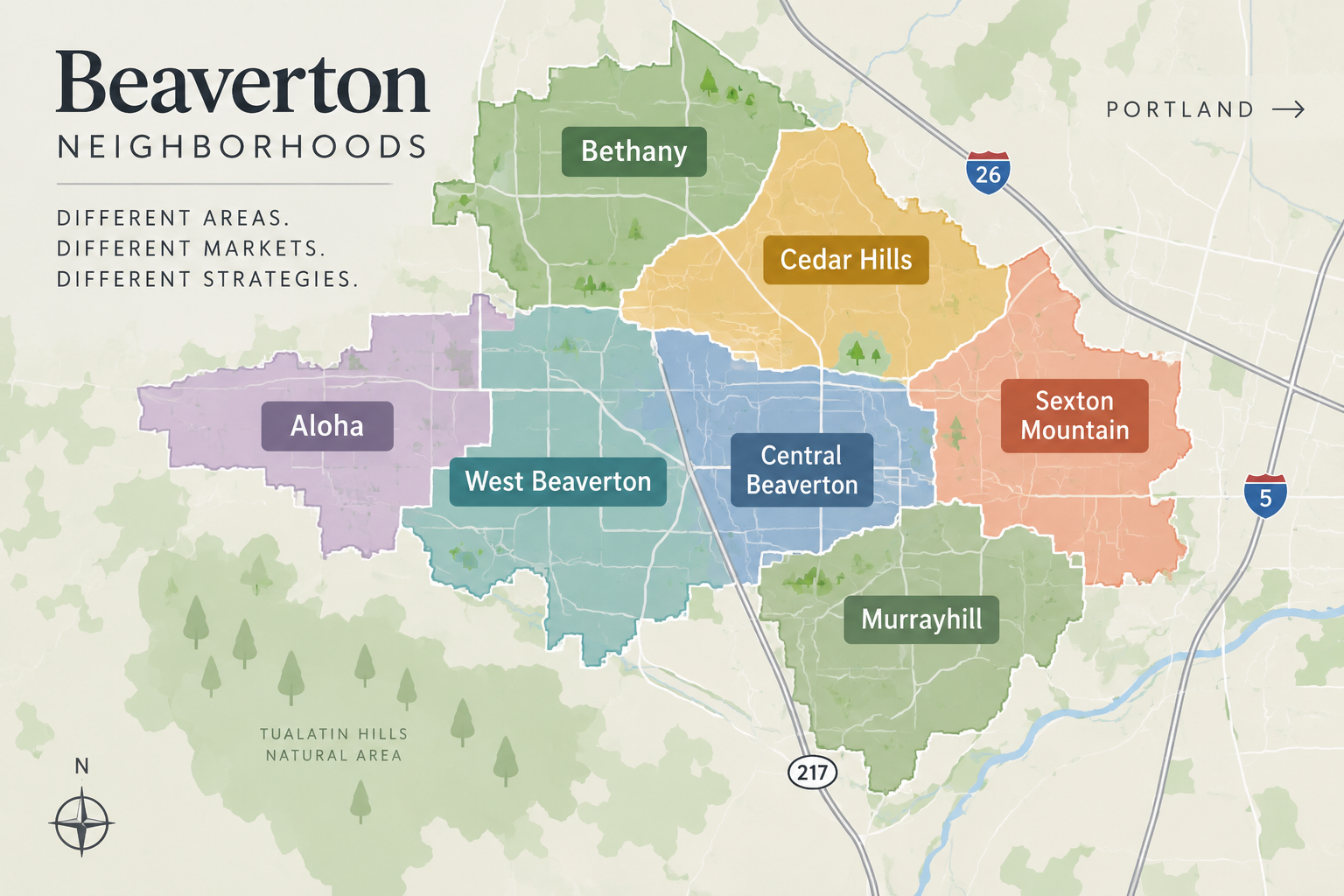
Cedar Hills has operated as a scarcity driven market, with fast sales and many homes selling above list. Long term owners here hold a rare combination of equity and demand, which is worth understanding rather than assuming will last indefinitely.
Bethany has been supported by steady, structural demand from relocation buyers and school driven families. That's a firmer footing than a short lived price spike.
Murrayhill and Sexton Mountain are where I see the most intentional downsizing. These are long term owners making a lifestyle decision, usually without urgency, and they benefit from planning the sale and the next purchase together.
Aloha and West Beaverton have felt the effects of employment shifts. Headline softening and the strength of well presented homes are both true at once. Condition and pricing decide which side of that split a home lands on.
Central Beaverton attached homes remain the most cautious part of the market. Extended marketing periods and more buyer leverage make realistic pricing and thorough preparation essential.

Why Detached and Attached Homes Can't Be Evaluated the Same Way
A detached home and a condo may sit within a mile of each other and still be in different markets. Detached homes in sought after neighborhoods are supported by limited inventory and family demand. Attached homes are shaped by HOA costs and reserves, investor activity, rental conditions, and buyers who have the time and the alternatives to compare carefully.
Applying detached home headlines to an attached home decision sets expectations that the market is unlikely to meet. The reverse is also true. A detached home owner in a scarcity driven pocket who prices by citywide softness may leave real value on the table. The two property types need separate conversations.
Why Q4 Matters Even If You Won't Move Until 2027
Waiting until 2027 to move doesn't mean waiting until 2027 to prepare. A few things are better done now than in a rush later:
Understanding your equity position, which is often larger than people assume and shapes what options are realistic.
Identifying deferred maintenance and prelisting decisions while there's time to sequence them calmly.
Learning how your specific segment is moving, so spring decisions aren't based on assumptions carried over from last year.
Thinking through coordination, if you'd be selling and buying at the same time or comparing new construction with resale.
None of this commits you to anything. It gives you more options and less pressure whenever you choose to act.

The Three Questions to Answer Before Deciding
What is the transition behind this possible move? Name what is actually changing: lifestyle, family, work, finances, or space. A clear reason makes every later decision easier.
Which Beaverton market am I actually in? Look at your neighborhood and your home type, not the citywide average, and ask what is happening on your street right now.
3. What do I need in order to feel ready, and when? Decide whether you are moving, waiting, or preparing, and what would have to be true for you to feel confident in that choice.
Practical Takeaways
For homeowners:
Treat Q4 as a planning period, not a pause.
Evaluate your own segment rather than the citywide story.
Separate preparing from committing. You can do the first without deciding on the second.
For buyers:
Expect different conditions in different neighborhoods and home types.
Compare new construction and resale on total cost, not first impressions.
For both:
Start with the reason for the move, then look at timing, then at the market.

The Strategic Perspective
Markets will keep changing, and no single quarter settles anything. What stays useful is a way of thinking: understand your own situation first, read your own segment honestly, and decide on your timeline instead of someone else's. Homeowners who do that tend to feel steady through whatever the market does next.
I spent more than twenty years coaching at the Division I level, helping families make major decisions at moments when the pressure was real. That experience shapes how I approach real estate. The first step is understanding where someone stands, and the decision comes after that.
Guidance first. Decisions second.
Which of these questions is hardest for you to answer right now: the reason, the market, or the readiness? I'd welcome your thoughts in the comments, or you can message me privately if you'd rather talk it through.
If you'd like to work through them with current, neighborhood level data, schedule a Q4 Home Strategy Conversation. It's a calm, no pressure look at what this market means for your situation.
You can also get free access to neighborhood guides, market resources, and more at rhonda-riley.manus.space.